
3 Months with the MOZA R21 Ultra

Updated: 6 days ago
When sim racers see a 21 Nm direct drive wheelbase, the first question is almost always: “Why do you need that much torque unless you want to snap your wrists?”
After putting the MOZA R21 Ultra through three months of endurance training, our answer as a father-and-son team is straightforward: It’s not about maximum force; it’s about headroom, dynamic signal fidelity, and building a flexible ecosystem for competitive racing.
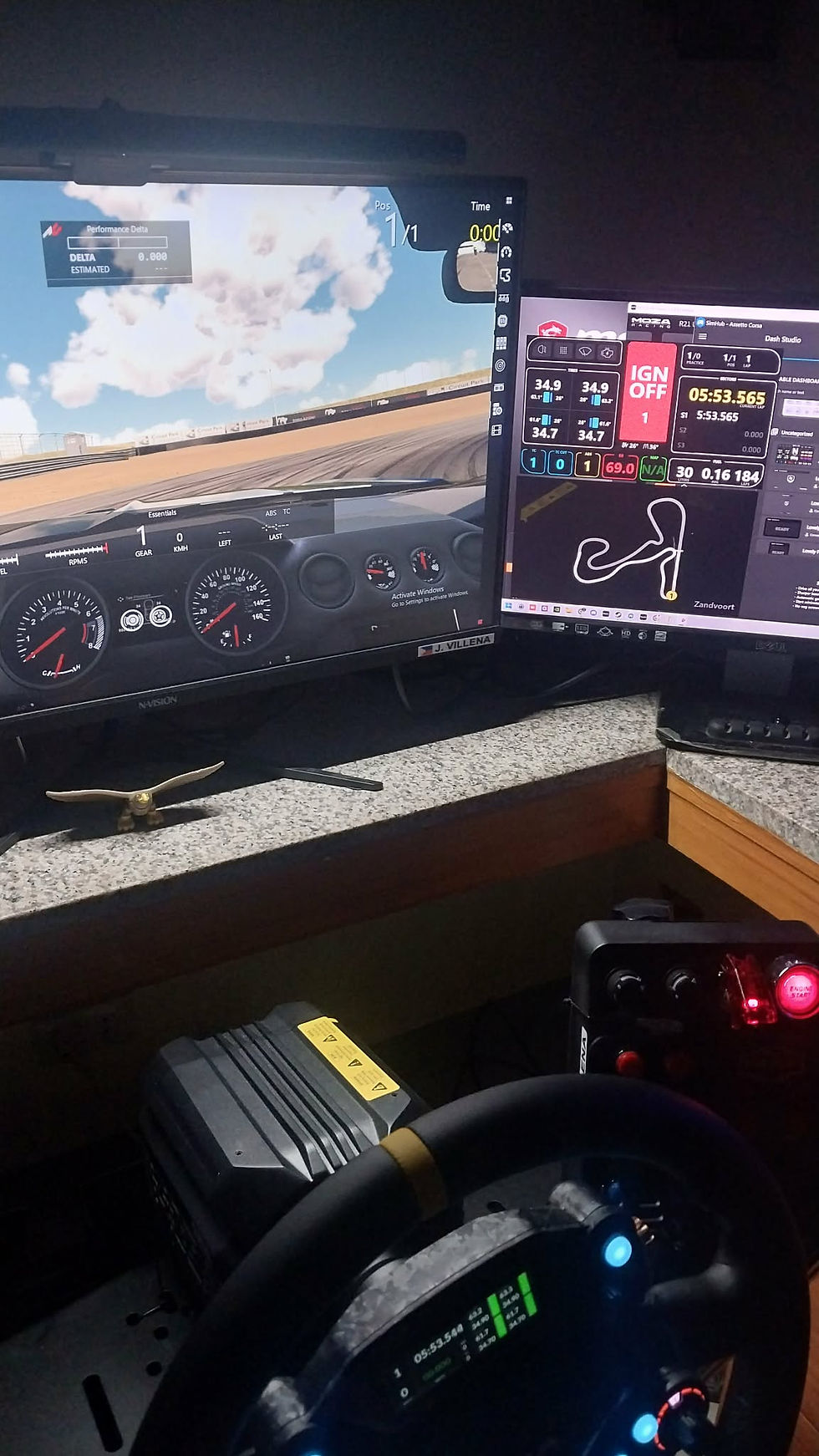
While Johann anchors our high-definition telemetry testing at home on the MOZA R21 Ultra, the rest of our teammates drive on MOZA R9s. Combining the flagship R21 Ultra with a fleet of R9s, MOZA SR-P Load Cell Pedals, and the versatile MOZA CS Pro wheel has transformed how our team prepares for the AAP Endurance series at Korsa Pitstop Cafe.

1. Do You Need 21 Nm? (Spoiler: We Only Use ~60%)
The real magic of the R21 Ultra’s 21 Nm motor isn't maxing out the torque slider—it’s running it at roughly 55% to 60% (~12–13 Nm).
Zero Motor Clipping: At 60% gain, high-energy events like aggressive curb strikes, abrupt snapping oversteer, or high-speed downforce compression are rendered without hitting torque saturation or dulling the signal.
Thermal Efficiency: Because the industrial-grade motor operates well below its thermal limits, force feedback doesn't fade or soften over long multi-hour endurance stints.
Fidelity & Slew Rate: Small road details, tire scrubbing, and micro-vibrations come through cleanly without the "muddy" sensation that occurs when pushing a lower-torque wheelbase to its limits.

2. Why the Round MOZA CS Pro Beats an F1-Style Wheel for Endurance
When picking our steering wheel rim, we deliberately chose the round MOZA CS Pro over a rectangular, open-wheel/F1-style rim for one key reason: Versatility.
   [ Versatility ]                [ On-Site Tuning ]
   Round Rim Profile             Integrated Rotary Encoders
          │                                  │
          ▼                                  ▼
Catch slides naturally without     Map Assetto Corsa FFB gain directly
losing hand placement during      to a physical knob for instant
heavy oversteer or contact.       on-track adjustments at Korsa.
Catching Slides with Confidence: In chaotic multi-class endurance stints or wet track conditions, a round wheel allows your hands to slide smoothly around the rim during large counter-steering inputs. Catching violent oversteer on a open-wheel rim can result in missed grips or awkward wrist angles.
Built-in On-the-Fly Control (Button Box Functionality): The CS Pro acts as an entire button box within thumb’s reach.
Live FFB Gain Adjustments in Assetto Corsa: During the AAP Endurance races hosted at Korsa Pitstop Cafe, we bring and mount our own CS Pro wheel to the venue's rigs. In Assetto Corsa, we map live FFB gain directly to one of the CS Pro's physical rotary knobs. If an on-site rig or car setup feels too heavy or starts clipping, Johann or I can adjust the force feedback strength instantly while driving down the straight without pausing or digging into software menus.

3. Bridging the R21 Ultra and the R9 Roster
Because most of our teammates run the MOZA R9, Johann’s R21 Ultra serves as a high-definition testing benchmark:
Equalizing Profiles: In MOZA Pit House, Johann dials the R21 Ultra’s torque down to 10 Nm during event prep weeks. This creates an exact match for the force threshold our R9 drivers experience at home and on-site at Korsa Pitstop Cafe.
Filter Tuning: We isolate fine details, adjust force feedback interpolation, and tweak equalizer curves on the R21 Ultra first. Once a profile feels dialed in, exporting the .json preset across the team takes seconds.
4. Team Alignment: MOZA SR-P Pedals & Multi-User OS Profiles
Hardware alignment across our roster doesn't stop at the wheelbases:
SR-P Load Cell Standardization: Because our team uses MOZA SR-P Load Cell Pedals (100 kg load cell), trail-braking telemetry is directly comparable across all drivers. A 40% brake application on Johann’s telemetry translates to the exact same physical pedal feel for the rest of the team.
Windows Multi-User Switching: On shared rigs, we maintain separate Windows local user accounts. Each driver keeps their own Pit House presets, FOV settings, and controller mappings saved cleanly under their account. Switching drivers during practice rotation is as fast as a Win + L user switch.
Summary Verdict
Feature | Performance Insight | Practical Team Value |
R21 Ultra Headroom | Best running at 50–60% gain | Delivers peak detail, zero motor clipping, and zero fade in long stints. |
MOZA CS Pro Wheel | Round rim + rotary encoders | Easier slide recovery + live Assetto Corsa FFB knob adjustments on-site. |
Pit House Parity | Throttles cleanly down to 10 Nm | Provides direct telemetry parity for our R9 drivers at home and at Korsa. |
Ecosystem Synergy | Unified MOZA ecosystem | Fast preset sharing, simple Discord debugging, and consistent trail-braking. |
5. Which MOZA Wheelbase Should You Choose?
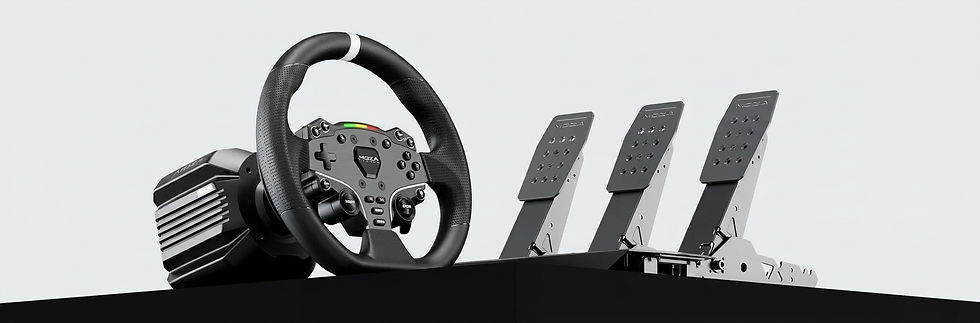
For Casual & Weekend Gamers: MOZA R5 BundleIf you’re driving recreationally, playing titles like F1, Assetto Corsa, or GT Auto for a few hours a week, or clamping a rig to a desk, the 5 Nm MOZA R5 is the sweet spot. It gives you direct drive response and smooth force feedback without requiring a heavy aluminum cockpit or driving fatigue.
For Competitive & Professional Sim Racers: Minimum 9 Nm (MOZA R9 or Higher)If you plan to compete in organized leagues, endurance series (like the AAP Endurance events), or train seriously, at least 9 Nm is the entry line. 9–10 Nm gives you the force ceiling needed to run detail-rich FFB curves without constant motor clipping, while providing enough resistance to build true muscle memory for trail-braking and counter-steering.




Comments